
10 Signs You Need Professional Tree Removal in Memphis
A Complete Homeowner’s Guide by Robinson Tree
Trees are one of the most valuable features of any Memphis property. They provide shade during hot Tennessee summers, improve curb appeal, increase property value, and create a natural barrier against wind and noise. But even strong, mature trees can become dangerous when disease, structural damage, or environmental stress takes hold.
The challenge for most homeowners is knowing the difference between a tree that needs trimming — and one that needs professional removal.
At Robinson Tree, we specialize in helping homeowners make safe, informed decisions about tree care. If you’re unsure whether a tree on your property poses a risk, this in-depth guide will walk you through the 10 clear warning signs you need professional tree removal in Memphis.
Why Tree Removal in Memphis Requires Special Attention
Memphis weather creates unique challenges for trees:
-
Severe thunderstorms
-
Straight-line winds
-
Heavy rainfall and saturated soil
-
Occasional ice events
-
High humidity encouraging fungal growth
These environmental factors accelerate decay and structural failure.
Ignoring early warning signs can lead to:
-
Roof damage
-
Vehicle destruction
-
Fence and driveway damage
-
Power line hazards
-
Neighbor liability disputes
-
Serious personal injury
Understanding the warning signs is the first step toward preventing costly emergencies.
1️⃣ Fungus Growing at the Base of the Tree
Why It’s Dangerous
Fungus at the base of a tree is often a sign of internal decay. While mushrooms may look harmless, they typically indicate rot inside the trunk or root system.
Common warning signs include:
-
Mushrooms growing near the trunk
-
Shelf-like fungal growth on bark
-
Soft or spongy wood at the base
-
Soil that smells decayed
What It Means
Fungi feed on decaying wood. If you see visible growth, internal rot has likely been present for months or even years.
Root rot is particularly dangerous because:
-
It weakens anchoring strength
-
Trees can fall suddenly without warning
-
External appearance may still look healthy
In Memphis’ rainy climate, fungal decay spreads quickly.
If fungus is present near the base, professional inspection is strongly recommended.
2️⃣ Hollow Trunk
Is a Hollow Tree Always Dangerous?
Not always — but it can be.
Some trees survive with minor hollowing. However, when more than 30–40% of the trunk is hollow, structural strength is compromised.
Warning Signs of a Hazardous Hollow Tree
-
Large cavity opening
-
Visible interior decay
-
Animals living inside trunk
-
Cracks extending from hollow area
-
Soft wood when pressed
Why Hollow Trees Fail
Trees rely on structural wood for strength. When decay eats away internal layers, the trunk becomes unstable under:
-
Wind pressure
-
Heavy rain
-
Ice accumulation
-
Weight of branches
Memphis storms can cause hollow trees to snap at the trunk base.
If the cavity is large or deep, removal is often the safest option.
3️⃣ Cracked or Splitting Bark
What Cracks Indicate
Cracks in bark often signal internal stress or structural failure.
Watch for:
-
Vertical splits along trunk
-
Deep cracks exposing inner wood
-
Bark peeling excessively
-
Splits after a storm
Why Cracks Are Serious
Cracks weaken the structural integrity of the tree. They also allow:
-
Moisture intrusion
-
Fungal infection
-
Pest infestation
In severe cases, trunk splits lead to complete breakage.
If a crack runs deep into the trunk, professional evaluation is necessary.
4️⃣ Sudden Leaning
Leaning vs. Dangerous Leaning
Some trees grow naturally at angles. However, a sudden lean is a red flag.
Warning Signs
-
Tree leaning after storm
-
Soil lifted on one side
-
Exposed roots
-
Cracks in the ground near base
-
Leaning toward home or driveway
Why Leaning Trees Are High Risk in Memphis
Heavy rain saturates soil, loosening root systems. Once roots shift, collapse risk increases dramatically — especially during high winds.
If your tree wasn’t leaning before and now is, call professionals immediately.
5️⃣ Dead or Falling Branches
“Widowmakers” in the Canopy
Large dead branches are extremely dangerous. They can fall without warning.
Warning signs include:
-
Branches without leaves in growing season
-
Brittle limbs
-
Branches dropping during mild wind
-
Visible decay in limbs
Dead limbs often indicate broader internal decline.
If more than 50% of branches are dead, full removal may be required.
6️⃣ Extensive Storm Damage
Memphis storms frequently cause:
-
Broken limbs
-
Split trunks
-
Lightning strikes
-
Canopy loss
When Storm Damage Requires Removal
-
More than 40% canopy destroyed
-
Major trunk split
-
Roots exposed
-
Tree shifted position
Sometimes storm damage looks minor but weakens internal structure.
Post-storm inspections are essential to prevent delayed collapse.
7️⃣ Root Damage or Soil Erosion
Roots are the foundation of tree stability.
Signs of Root Damage
-
Exposed roots
-
Soil washing away
-
Fungal growth around roots
-
Tree wobbling in wind
-
Pavement lifting near base
Memphis properties with drainage issues are especially vulnerable.
When roots are compromised, even a healthy canopy can’t prevent collapse.
8️⃣ Tree Too Close to Your Home
Structural Risk Factors
Trees planted too close to houses can cause:
-
Foundation cracks
-
Roof damage
-
Gutter clogging
-
Pest access
-
Sewer line damage
If a mature tree is within falling distance of your home, removal may be safer — especially if any health issues are present.
Safe distance guidelines:
-
Small trees: 10–20 feet
-
Medium trees: 20–30 feet
-
Large trees: 30–50 feet
9️⃣ Pest Infestation
Insects weaken trees internally.
Common signs include:
-
Holes in bark
-
Sawdust at base
-
Woodpecker activity
-
Thinning canopy
-
Dying upper branches
Borers and termites hollow trees from the inside.
By the time symptoms appear, structural integrity may already be compromised.
🔟 Advanced Tree Disease
Some diseases are fatal and untreatable.
Common regional threats:
-
Root rot
-
Heart rot
-
Cankers
-
Bacterial leaf scorch
If disease spreads into trunk and roots, removal is often necessary to:
-
Protect nearby trees
-
Prevent falling hazards
-
Reduce liability
When Tree Removal Is NOT Necessary
Not every warning sign means removal is required.
Tree preservation may be possible if:
-
Damage is limited
-
Lean is long-standing and stable
-
Disease is treatable
-
Pruning corrects imbalance
Professional assessment prevents unnecessary removal.
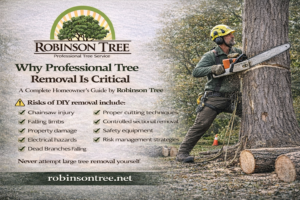
Why Professional Tree Removal Is Critical
Tree removal is dangerous work.
Risks of DIY removal include:
-
Chainsaw injury
-
Falling limbs
-
Property damage
-
Electrical hazards
-
Improper fall direction
Professional crews use:
-
Proper cutting techniques
-
Controlled sectional removal
-
Safety equipment
-
Risk management strategies
Never attempt large tree removal yourself.
The Cost of Ignoring Warning Signs
Delaying action can result in:
-
Emergency removal fees
-
Structural repair costs
-
Insurance disputes
-
Legal liability
-
Personal injury
Preventative removal is almost always less expensive than emergency response.
Why Memphis Homeowners Trust Robinson Tree
At Robinson Tree, we focus on:
-
Honest recommendations
-
Thorough inspections
-
Safe removal practices
-
Storm damage response
-
Complete cleanup
Our goal is to protect your home, family, and property value.
When to Call Robinson Tree Immediately
Call if you notice:
-
Sudden leaning
-
Large dead branches
-
Fungus at base
-
Cracked trunk
-
Storm damage
-
Roots lifting
-
Tree touching roof or power lines